

Freshwater pearls are pearls grown in mussels that live in lakes, rivers and ponds. Almost all freshwater pearls used in jewelry today are cultured freshwater pearls: a farmer initiates the growth process, and the mussel deposits layers of nacre to form the pearl.
They are widely used in jewelry because they offer an unusually broad range of shapes, sizes and soft natural colours. “Cultured” does not mean imitation—the pearl still grows inside a living mollusk. What changes is how the process begins.
How do freshwater cultured pearls form?
Cultivation usually begins when a technician places a small piece of mantle tissue into the mussel. This encourages a pearl sac to form, and the mussel deposits layers of nacre—the material responsible for much of a pearl’s lustre and depth—around the developing pearl.
Many traditional freshwater cultured pearls are tissue-nucleated rather than formed around a round shell bead. As a result, they may be composed almost entirely of nacre. Bead-nucleated freshwater pearls are also increasingly available and can produce larger or more symmetrical forms.
The process takes time, and it is never perfectly predictable. The mussel, its environment, the placement of the tissue or bead, and the length of cultivation can all influence the finished pearl.
Where are freshwater pearls cultivated?
China is the leading source of freshwater cultured pearls in today’s market. Smaller and more specialised production also exists in Japan and other freshwater-growing regions. The word “freshwater” describes the growing environment; it does not identify one country or one cultivation method.
Origin can provide useful context, but it does not determine quality by itself. Lustre, surface, shape, colour, size, nacre quality and matching still need to be considered in the individual pearl or finished piece.
What do freshwater pearls look like?
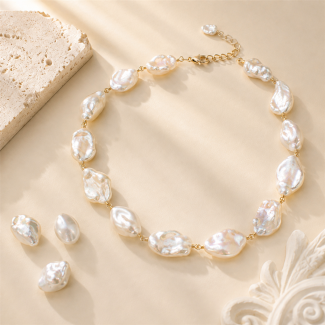
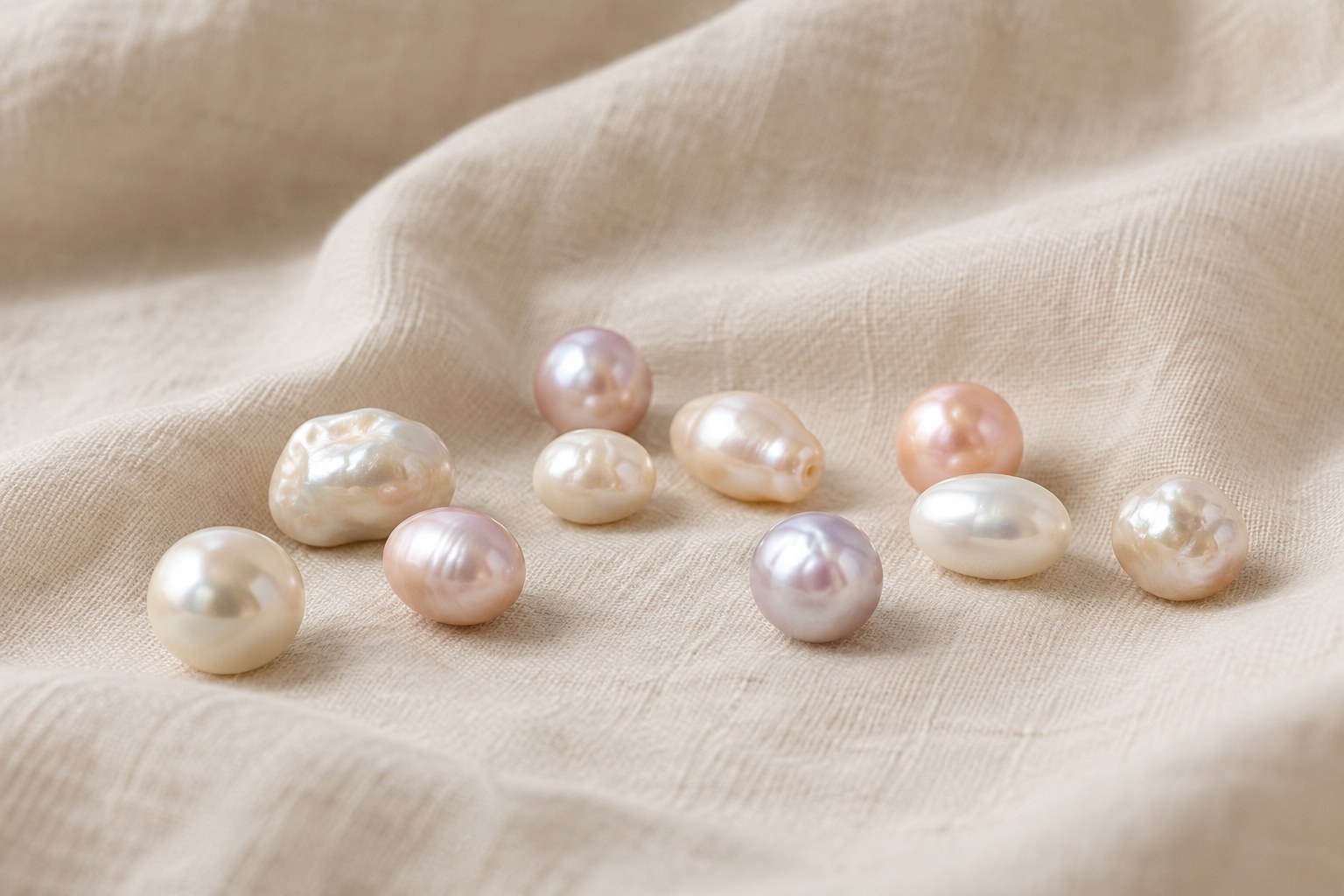
Freshwater pearls cover an unusually broad visual range, from very round strands to strongly sculptural forms. Shape affects the look of a piece, but it should be considered alongside lustre, surface, colour and construction.
Shape
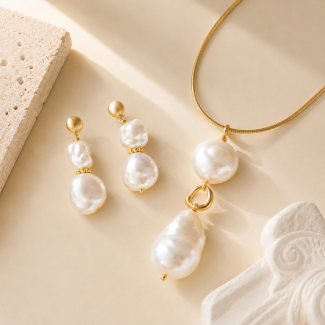
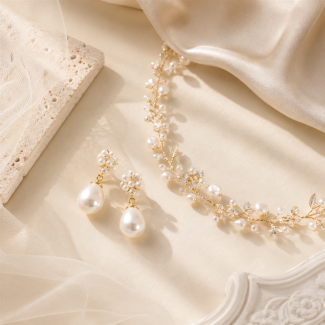
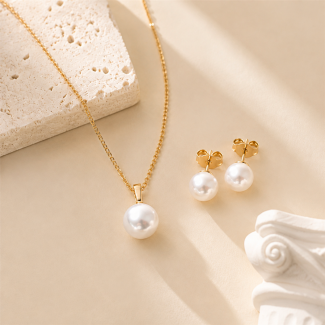
They can be round, near-round, oval, button-shaped, drop-shaped, circled or baroque. Perfectly round freshwater pearls exist, but they are less common than gently irregular forms. A pearl does not need to be perfectly round to be beautiful or well made.
If you are drawn to more sculptural silhouettes, our guide to what baroque pearls are explains why those one-of-a-kind shapes form.
Colour
White and cream are familiar, but cultured freshwater pearls can also appear in soft pink, peach and lavender tones. Some show subtle overtones or a rainbow-like play of colour called orient. Pearls may also be dyed or otherwise treated, so a seller should disclose treatments when they affect care, value or a buyer’s expectations.
Lustre and surface
Lustre describes the light reflected from and just beneath a pearl’s surface. Some freshwater pearls have a gentle, satiny glow; higher-lustre examples can look bright and crisp. Their surfaces may include tiny ridges, dimples or variations created as they grew. These features should be assessed alongside lustre, shape and the overall design—not automatically treated as flaws.
Are freshwater pearls real?
Yes. Cultured freshwater pearls are real pearls grown by mollusks. They are different from imitation pearls, which are manufactured from materials such as glass, plastic or coated shell.
“Natural” and “cultured” are not interchangeable terms: natural pearls form without deliberate human intervention, while cultured pearls begin with human assistance. Because natural pearls are rare, “cultured freshwater pearls” is the clearest description for most freshwater pearl jewelry sold today. For a focused explanation of the terminology, read what “real” means for freshwater pearls.
Freshwater pearls vs saltwater pearls at a glance
“Freshwater” and “saltwater” describe the environment and mollusk in which a pearl grows. Saltwater cultured pearl families include Akoya, Tahitian and South Sea pearls. Each has its own typical colours, sizes, shapes and cultivation methods.
Freshwater cultured pearls are generally known for variety, accessibility and a broad colour palette. Saltwater types are often associated with particular visual signatures: Akoya pearls with bright lustre and classic round forms, Tahitian pearls with naturally dark body colours, and South Sea pearls with larger sizes.
Those are useful tendencies, not absolute quality rankings. A fine freshwater pearl can have excellent lustre, and not every saltwater pearl is perfectly round or high quality. Compare individual pearls by what you can actually see and by the seller’s material disclosure. For a closer comparison of origin, cultivation, colour and size, see how freshwater and saltwater pearls differ.
What determines freshwater pearl quality?
No single feature tells the whole story. Pearls are commonly considered through a group of connected factors:
- Lustre: how bright, sharp and dimensional the reflected light appears.
- Surface: the type, number and visibility of natural surface features.
- Shape: whether the pearl is round, symmetrical or baroque, and how well the shape suits the design.
- Colour: the body colour, overtone and any orient visible on the surface.
- Size: measured in millimetres; larger pearls are generally less common when other factors are comparable.
- Nacre quality: the appearance and integrity of the pearl-forming material.
- Matching: how intentionally pearls relate to one another in a pair, strand or multi-pearl design.
“Matching” does not always mean making every pearl look identical. In small-batch and handmade work, thoughtful matching may mean choosing pearls with compatible lustre, colour and visual weight while allowing their individual shapes to remain visible.
Why are freshwater pearls often more accessible?
Freshwater mussels can produce more pearls during a cultivation cycle than many saltwater oysters, and freshwater pearl farming operates at substantial scale. This helps make cultured freshwater pearls available across a broad range of prices.
Accessible does not mean low quality. Fine examples can be very round, large and highly lustrous. Price also reflects the design, metalwork, matching and craftsmanship of the finished piece—not only the type of pearl.
Why do shapes and surfaces vary?
A pearl grows through an organic process rather than a factory mould. Minute differences in the pearl sac, the movement of the developing pearl and the surrounding conditions affect how nacre accumulates. That is why even pearls from the same mussel or harvest can differ in outline, colour and surface.
In finished jewelry, these differences can guide placement and matching. A maker may orient a curved edge toward the light, balance two unlike forms by size and visual weight, or use one expressive pearl as the focal point. Irregularity is not a substitute for good selection: the pearls should still feel deliberate within the design.
How to choose freshwater pearl jewelry
Begin with the feeling you want rather than a rule about what pearls “should” look like.
- Choose round or near-round pearls for a more classic, even rhythm.
- Choose oval or drop shapes for graceful movement and a softly elongated line.
- Choose baroque pearls for sculptural form and visible individuality.
- Look at lustre in soft daylight if possible. Clear, lively reflections give a pearl depth.
- Check that surface variation looks intentional within the design.
- Read the full material description, including the metal, stringing method and any disclosed pearl treatments.
For earrings, consider how closely you want the pair to match. For necklaces and bracelets, look at the flow of size, colour and shape across the whole piece. A well-designed composition should feel harmonious even when the pearls are not identical.
How should freshwater pearls be cared for?
Pearls are softer than many gemstones and can be scratched by metal edges or harder jewelry. Put pearl jewelry on after perfume, hairspray and cosmetics have dried, then remove it before showering, swimming or exercising. After wear, wipe the pearls gently with a clean, soft cloth.
Store them separately in a soft pouch or lined compartment. Avoid steam and ultrasonic cleaners. When a deeper clean is needed, use a gentle method appropriate to the entire piece, especially if it contains silk thread, adhesive or other delicate materials. See our complete pearl jewelry care guide and safe pearl cleaning steps.
For a broader introduction to pearl types, shapes and quality, explore our Pearl Guide.
Frequently asked questions
Are freshwater pearls always cultured?
Natural freshwater pearls do exist, but they are rare. Most freshwater pearls in contemporary jewelry are cultured, so responsible descriptions should identify them as cultured freshwater pearls.
Are freshwater pearls valuable?
They span a wide value range. Lustre, surface, shape, colour, size, nacre quality and matching all matter, as do the craftsmanship and materials of the finished jewelry.
Do freshwater pearls come in natural colours?
Yes. White, cream, pink, peach and lavender tones can occur naturally in cultured freshwater pearls. Some pearls are dyed or otherwise treated, and relevant treatments should be disclosed.
Can freshwater pearls be perfectly round?
Yes, though very round examples are less common than oval, button, near-round and baroque shapes. Roundness is one value factor, not the only measure of beauty or quality.
Are freshwater pearls suitable for everyday wear?
They can be worn often with thoughtful care. Protect them from scratches, chemicals, prolonged water exposure and impact, and wipe them after wear.